
Walk-In Tub vs Walk-In Shower for Seniors
Walk-in tubs are generally better for seniors in Savannah who need seated stability and fall prevention, while walk-in showers are better for those who want easier access, faster routines, and more flexibility. The right choice depends on mobility level, space, and how the bathroom is used daily.
Why This Decision Looks Different in Savannah Homes
In Savannah, choosing between a walk-in tub and a walk-in shower isn’t just about preference. It’s shaped by the homes themselves. Many properties were built decades ago, often with tighter bathrooms, higher tub walls, and layouts that weren’t designed for long-term mobility.
Humidity also plays a role in how these spaces function. Floors stay damp longer, surfaces can become slick, and ventilation isn’t always ideal in older homes. That makes the bathroom one of the first places where safety becomes a real concern.
Because of that, the decision isn’t simply about upgrading a fixture. It’s about choosing a setup that will continue to work reliably in a coastal environment while supporting daily routines safely.
The Core Difference Comes Down to How You Bathe
At a basic level, the difference between a walk-in tub and a walk-in shower is how the body is supported during bathing.
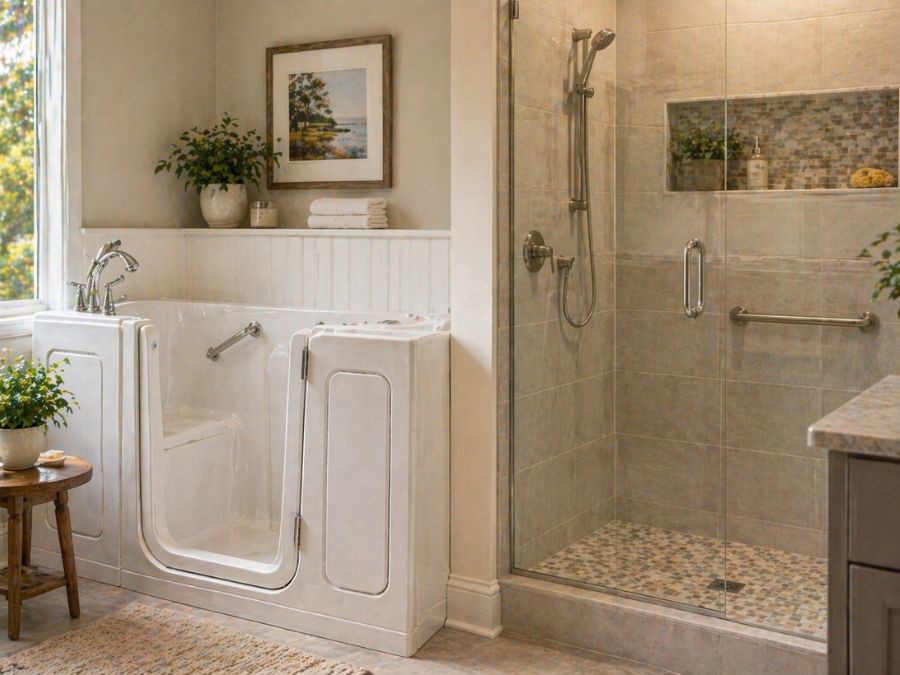
A walk-in tub is designed for seated bathing. The user enters through a low-threshold door and sits down immediately, which reduces the need for balance and removes the most dangerous movement—stepping over a tub wall. This setup is often considered safer for people with more limited mobility because it provides multiple points of stability.
A walk-in shower, on the other hand, is designed for standing or optional seated use. It typically has a low or zero threshold and an open layout, making it easier to enter and exit. It also allows more room for movement or assistance, which can be important in certain situations.
This difference may seem simple, but it has a direct impact on safety, comfort, and long-term usability.
Safety: Which One Actually Reduces Risk More?
Safety is usually the main reason families consider either option, but the answer isn’t the same for everyone.
Walk-in tubs tend to offer more built-in safety features as standard. The seated position, enclosed design, and multiple grab points reduce the chance of slipping during use. For seniors with balance concerns, this can make a noticeable difference in confidence.
Walk-in showers also improve safety compared to traditional setups, especially when designed with slip-resistant flooring and grab bars. However, they still require some level of balance, even if a seat is added. For someone who struggles with standing stability, that can remain a concern.
At the same time, walk-in showers have one advantage that often gets overlooked. Their open layout makes it easier for caregivers to assist if needed, and they can accommodate mobility aids like walkers or wheelchairs more easily.
In practice, tubs are often safer for those with moderate mobility challenges, while showers may be safer for those with more advanced mobility limitations or caregiver involvement.
Daily Use: What It Actually Feels Like Over Time
The biggest difference between these two options shows up in everyday routines.
A walk-in shower is typically quicker and more straightforward. You can step in, use it, and step out without waiting. That simplicity makes it appealing for people who prefer efficiency or don’t want to change their routine significantly.
A walk-in tub creates a different experience. It requires sitting while the tub fills and drains, which takes more time. For some people, that becomes a relaxing part of the day. For others, especially those who prefer shorter routines, it can feel less convenient.
Over time, usage patterns tend to diverge. Showers are used frequently and quickly, while tubs are used more deliberately. That difference often becomes the deciding factor for many households.
Space and Layout Considerations in Savannah Homes
Space plays a larger role in Savannah homes than many people expect. Older layouts often limit how much flexibility there is when making changes.
Walk-in showers typically require less space and can make a bathroom feel more open. This can be especially helpful in smaller homes where every inch matters.
Walk-in tubs, while designed to fit into existing footprints, still take up a defined area and can feel more enclosed. In tighter bathrooms, this can affect how the space functions overall.
There’s also the structural side to consider. Installing a zero-threshold shower may require floor adjustments for proper drainage, while a walk-in tub may require plumbing or electrical updates. Both are manageable, but they depend on the home’s condition.
Cost Differences and What Drives Them
Cost is often part of the decision, but it’s rarely the only factor.
Walk-in showers generally have a wider price range, with basic installations being more affordable and custom designs becoming more expensive.
Walk-in tubs tend to fall into a higher price range overall, especially when features like hydrotherapy or fast-drain systems are included. Installation may also require additional work, depending on the home.
What matters most is how that cost aligns with use. A shower that’s used daily or a tub that provides consistent comfort can both justify the investment. The key is matching the cost to the benefit you’ll actually experience.
Which One Is Better for Aging in Place?
There isn’t a single answer that fits every situation, but there are clear patterns that help guide the decision.
A walk-in tub is usually the better choice when balance is becoming a concern, when seated bathing feels safer, or when there’s a need for added stability. It’s designed to reduce risk in a very direct way and works well for those who want to remain independent without standing for long periods.
A walk-in shower is often the better option when ease of access is the priority, especially for those who may eventually use mobility aids or require assistance. Its open design and flexibility make it easier to adapt over time.
In many cases, the decision comes down to how mobility is expected to change. Planning for both current needs and future scenarios often leads to a clearer answer.
Choosing What Will Still Work Years From Now
This decision is rarely about today alone. It’s about what will still feel safe and manageable a few years from now.
In Savannah, where many homeowners plan to stay long term, that perspective matters. The right choice is the one that fits both the home and the person, not just now, but as needs change.
If you’re weighing the difference between a walk-in tub and a walk-in shower, the most helpful next step is to look at your specific space and routine. Schedule a no-pressure home safety assessment to get a clear, practical recommendation based on how your home actually works.

Jason James is Co-Founder and Director of Sales at Home Mobility Solutions, serving homeowners across the Hilton Head Island–Bluffton–Port Royal, SC Metro Area with walk-in tubs, stair lifts, home elevators, and other accessibility upgrades. He moved to the Lowcountry in 1993 and built a career in residential and commercial construction before founding Lowcountry Walk-In Tubs in 2009 to help seniors and people with disabilities bathe safely at home. That company grew into Home Mobility Solutions, where Jason now leads sales and client relationships across Bluffton, Hilton Head Island, Beaufort, Ridgeland, and Hardeeville.