
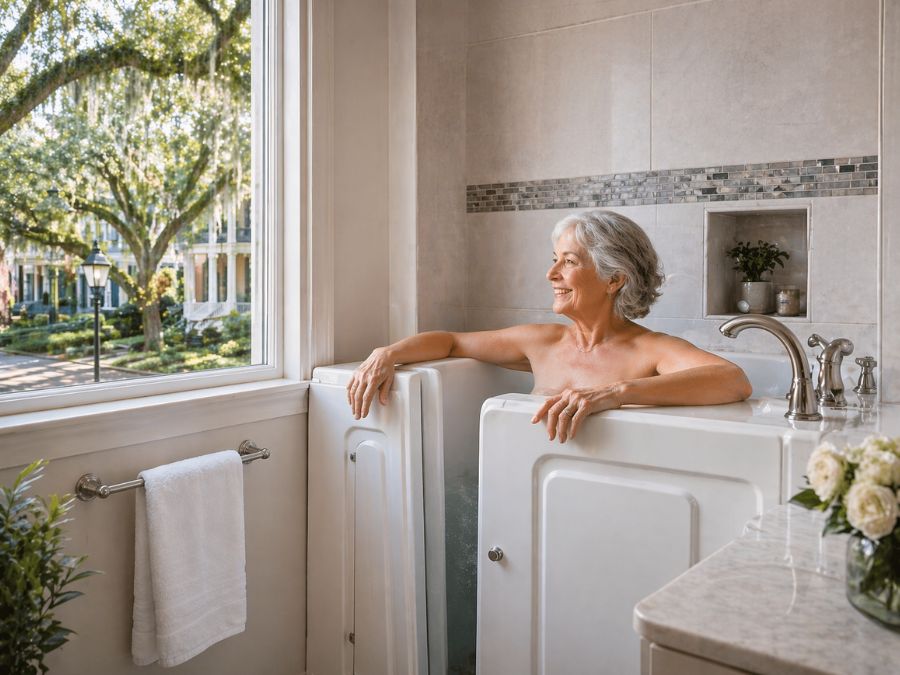
Aging In Place With A Walk-In Tub In Savannah, GA
A walk-in tub makes aging in place in Savannah safer by eliminating the need to step over a high tub wall and adding built-in support features. It’s a practical upgrade for older homes where bathrooms were never designed for long-term mobility or safety.
When the Bathroom Starts to Feel Different
For many families in Savannah, the conversation doesn’t begin with a renovation plan. It starts with a moment that feels small at first. Maybe it’s the way a parent pauses before stepping into the tub or how they steady themselves more carefully than they used to. These are subtle shifts, but they tend to stand out once you notice them.
For seniors, those moments can feel frustrating or even a little discouraging. Something that used to be automatic now requires more thought and effort. For adult children, it creates a different kind of pressure. There’s often a balance between respecting independence and recognizing that safety may be changing.
Aging in place is really about responding to those moments early, before they turn into real problems. It’s not about overcorrecting or making drastic changes. It’s about identifying the areas of the home that no longer work the way they should and making practical adjustments that restore confidence.
What Aging in Place Actually Means in a Savannah Home
Aging in place isn’t a single upgrade or one-time decision. It’s an ongoing approach to making a home safer and more usable as needs change. In Savannah, that process often requires working within homes that were built long before accessibility was ever considered.
Many properties in the area, especially older ones, have tighter bathroom layouts and older plumbing systems. These homes weren’t designed for mobility limitations, and over time, those limitations start to show. Even newer homes can present challenges if the layout prioritizes aesthetics over function.
There’s also the environmental factor to consider. Savannah’s humidity affects how surfaces feel and how materials hold up over time. Floors can stay damp longer, and even minor moisture can increase the risk of slipping. These conditions don’t make a home unsafe on their own, but they do make certain areas like the bathroom, more important to address.
Why the Traditional Tub Becomes the Problem
A standard bathtub requires a combination of balance, strength, and coordination that becomes harder to maintain over time. Stepping over the tub wall, shifting weight, and lowering into the basin all happen in a small space where there isn’t much room for error.
In many Savannah homes, especially historic ones, the area around the tub doesn’t provide much support. There are often no built-in grab points, and the surrounding surfaces are hard and unforgiving. If balance shifts even slightly, there’s very little to catch or stabilize the movement.
What we see in real situations is that people rarely go from confident to unsafe overnight. Instead, they begin adjusting their behavior. They move more cautiously, shorten their routines, or avoid bathing as often. Those changes are often the clearest indication that the setup is no longer working the way it should.
How a Walk-In Tub Changes That Daily Routine
A walk-in tub changes the experience by removing the most physically demanding part of bathing. Instead of stepping over a high edge, the user enters through a low threshold and transitions directly into a seated position. That alone reduces the need for balance and minimizes strain on the body.
Once inside, the environment feels more controlled. The seating is stable, the surfaces are designed to reduce slipping, and the layout supports natural movement rather than working against it. This allows the user to focus less on the mechanics of getting in and out and more on the routine itself.
Over time, that shift can restore a sense of normalcy. Bathing becomes something that feels manageable again rather than something to approach with caution. For many families, that change brings both relief and reassurance, especially when they’ve been quietly concerned about safety.
What Installation Really Looks Like in Savannah Homes
Installing a walk-in tub is usually more straightforward than people expect, but older homes in Savannah often come with conditions that need to be addressed along the way. The process typically begins with removing the existing tub and evaluating the surrounding structure.
Behind the walls, it’s common to find older plumbing or framing that needs minor adjustments. Floors may not be perfectly level, and some materials may need reinforcement to support the new installation. These aren’t unusual complications, they’re part of working in homes that have been in place for decades.
In raised homes, access underneath can make certain adjustments easier, while slab homes may require more precise work. Electrical upgrades may also be necessary if the tub includes powered features. Most installations are completed within a few days, but the exact timeline depends on how much needs to be addressed to ensure everything functions properly.
The Things Most People Don’t Think About Until After Installation
When people first explore walk-in tubs, they often focus on visible features like seating and entry design. What tends to matter more over time are the details that affect daily use. These aren’t always obvious at the start, but they shape the overall experience.
Drain speed is one of the most noticeable factors. Since the user remains seated while the tub empties, a faster drain helps the process feel efficient and comfortable. Without it, the experience can feel longer than expected, especially for someone who prefers a quicker routine.
Water supply is another important consideration, particularly in older Savannah homes. Ensuring that the system can maintain consistent temperature and volume makes a significant difference in comfort. Even smaller elements, like how the door seals or where controls are placed, contribute to how intuitive the tub feels over time.
Understanding Cost Without Guesswork
The cost of a walk-in tub in Savannah depends on both the product and the condition of the home. A simpler installation in a newer property will typically require less adjustment than one in an older home with aging infrastructure.
Features also play a role in pricing. Some homeowners prioritize essential safety elements, while others look for additional comfort features like hydrotherapy or heated surfaces. Each of these choices adds to the overall investment, but they also affect how the tub is used day to day.
For many families, the decision goes beyond the initial cost. It becomes a question of long-term safety and independence. When compared to the potential impact of a fall or the need for outside care, the investment often feels more like a proactive step than a reactive one.
When a Walk-In Tub Is the Right Decision
A walk-in tub is often the right choice when the current bathing setup no longer feels safe or reliable. That might show up as hesitation, difficulty stepping in, or a growing sense that the routine has become more complicated than it should be.
It can also be a valuable solution when a caregiver is involved. A more stable environment makes it easier to assist without added risk or strain. This can improve the experience for both the person using the tub and the person helping them.
At the same time, every home is different. In some cases, a walk-in shower or a combination of smaller modifications may be a better fit. The goal is not to choose a product—it’s to choose the solution that best supports how the space is actually used.
A Safer Home Without Leaving It Behind
Most families don’t make this decision all at once. It usually starts with a small concern that gradually becomes harder to ignore. Taking action early allows those concerns to be addressed in a controlled and thoughtful way.
In Savannah, where homes often hold years of meaning, staying in place matters. The goal isn’t to change the home completely—it’s to make sure it continues to support the life being lived in it.
If you’re starting to think about what that might look like, the next step is simply understanding your options. Schedule a no-pressure home safety assessment to get a clear, practical picture of what will work best in your space.