
What Size Water Heater Do I Need for a Walk In Tub?
Quick Answer:
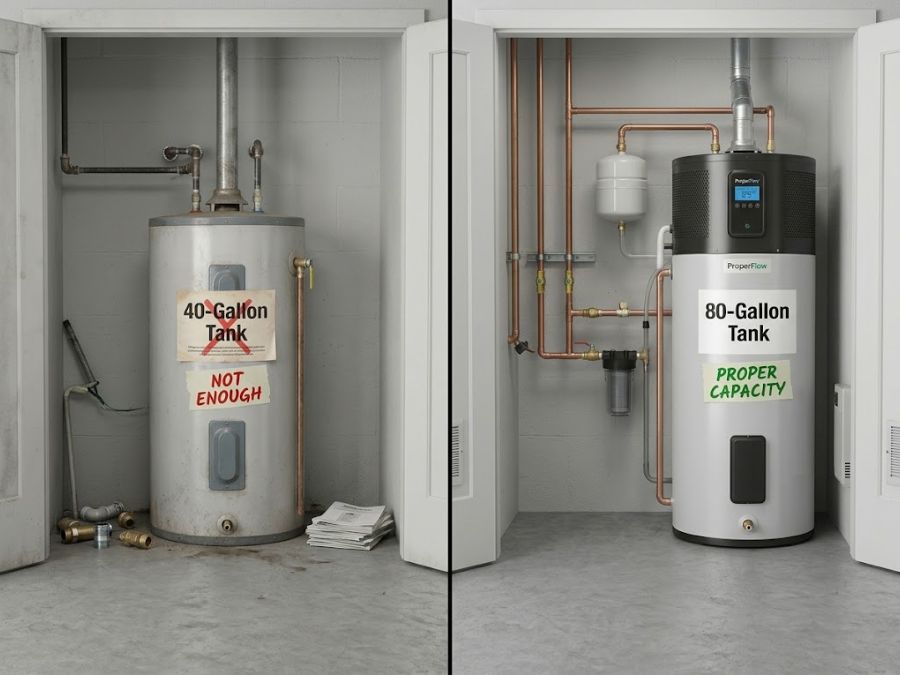
Most walk-in tubs require a 50 to 80-gallon water heater, and many standard 40-gallon tanks are not enough. In many Hilton Head homes, a 50-gallon system is the minimum, while 65 to 80 gallons provides a more reliable experience. The right size depends on your tub, household usage, and how your current system is set up.
Why Water Heater Size Becomes a Problem After Installation
This is one of the most common and most expensive mistakes homeowners make when installing a walk-in tub, and it often does not show up until the project is already complete.
Everything gets planned around safety, comfort, and accessibility. The tub is installed, the space looks great, and expectations are high. Then the first time it is used, the water begins hot but gradually turns lukewarm before the tub is even full. What should have been a relaxing experience quickly becomes frustrating.
At that point, the issue is no longer theoretical. It becomes something the homeowner has to deal with every time the tub is used, and correcting it after installation is far more complicated than addressing it upfront. In many homes across Hilton Head, Bluffton, and Beaufort, the existing water heater was never designed to handle the volume a walk-in tub requires, which is why this problem is so common.
Why Walk-In Tubs Demand More From Your Water Heater
Walk-in tubs are designed for safety and comfort, but that design naturally increases how much water is needed to use them properly.
Because of the built-in seat and the taller wall height, these tubs hold significantly more water than a traditional bathtub. Most models require between 50 and 80 gallons to reach a proper soaking level. That extra depth allows the user to sit comfortably while the water rises around them, which is what makes the experience both safer and more therapeutic.
In many Hilton Head homes, especially older properties, the original water heater was sized for basic daily use, such as showers, sinks, and laundry. It was not designed to deliver a large volume of hot water all at once. When that demand suddenly increases, the system often cannot keep up, which is where performance issues begin to show.
What That Water Volume Actually Looks Like in Your Home
The difference in water usage becomes much clearer when you compare it to a standard bathtub.
A typical bathtub uses around 25 to 35 gallons of water for a normal bath. A walk-in tub, by comparison, often requires double that amount to reach a comfortable soaking height. That is a significant jump in demand, especially for homes with older or smaller water heaters.
Even though your body displaces some of that water, the system still needs enough hot water to reach the overflow drain while maintaining a consistent temperature. If it cannot do that, the bath will never feel fully warm or comfortable. This is why sizing is not just a technical detail. It directly affects whether the tub feels like an upgrade or a disappointment.
What Happens When the Water Heater Is Too Small
When the system is undersized, the issue becomes obvious the first time the tub is used, and it tends to repeat every time after that.
The tub begins filling with hot water, but before it reaches a comfortable level, the heater runs out of capacity. As more water is added, the temperature begins to drop, resulting in a mix of warm and lukewarm water that never quite reaches the desired level. For someone expecting a relaxing soak, this can be frustrating and uncomfortable.
Over time, this often leads to reduced use of the tub. Homeowners may shorten their baths, avoid using the tub altogether, or feel like the upgrade did not deliver what they expected. This is why experienced installers in the Hilton Head area evaluate water capacity early in the process, even though it is one of the most overlooked factors during initial research.
What Most Homes in Hilton Head Actually Need
There is a practical reality to water heater sizing that many homeowners are not told until they are deep into the process.
A 40-gallon water heater is almost never sufficient for a walk-in tub. It simply does not have the capacity to deliver a full, consistent hot fill, especially when other fixtures are in use at the same time.
A 50-gallon system is often considered the starting point, but in many real-world scenarios, it is borderline. It may work under ideal conditions, but it leaves little room for error if the tub is larger or if there is any simultaneous water usage in the home.
In many Hilton Head and Bluffton homes, a 65 to 80-gallon tank provides a much more reliable experience. This allows the tub to fill fully with hot water while maintaining a steady temperature from start to finish. It also gives homeowners the confidence that the system will perform consistently without needing to adjust their routine around it.
What Happens in a Two-Person Household
In many Lowcountry homes, this decision involves more than one person, which changes the demands on the system.
If two people plan to use the tub within a short period of time, the water heater needs to recover quickly between uses. A 50-gallon tank may be able to handle the first bath, but the second person often ends up waiting for the system to reheat or dealing with inconsistent water temperature.
This is where recovery rate becomes just as important as tank size. In two-person households, an 80-gallon tank or a high recovery system is not excessive. It is what allows both people to use the tub comfortably without having to plan their day around hot water availability.
Why Tankless Systems Sometimes Fall Short
Tankless systems are often appealing because they promise endless hot water, but their performance depends on how much water they can heat at one time.
Walk-in tubs are designed to fill quickly, so the user is not left sitting in a cold tub while waiting. This requires a high flow rate. If the system cannot heat water at that same rate, the temperature begins to drop during the fill process.
In practical terms, if the tub is pulling more hot water per minute than the system can produce, the result is inconsistent temperature and reduced comfort. In the Lowcountry, this is further affected by seasonal changes in groundwater temperature. During cooler months, the system must work harder to heat incoming water, which can reduce overall output.
This is why tankless systems must be carefully sized based on both flow rate and temperature rise, not just general capacity claims.
Lowcountry Specific Considerations That Affect Sizing
Homes in Hilton Head, Bluffton, and Beaufort bring additional factors into the equation that are not always obvious at first.
Many homes are built on slab foundations, which can make plumbing modifications more involved. Electrical capacity is another consideration, especially when upgrading to larger systems or switching to tankless. These are not obstacles, but they do require planning.
Humidity and coastal conditions also affect system longevity and performance over time. Equipment must be installed and configured properly to handle the environment. These are the types of details that experienced local installers account for early, ensuring the system performs reliably long after installation is complete.
Will a Larger Water Heater Even Fit in Your Home
Physical space is another factor that often gets overlooked until the project is already underway.
In many Hilton Head and Bluffton homes, water heaters are located in tight utility closets, garages, or attic spaces. Moving from a 40-gallon tank to a larger system may require more room than what is currently available, which can limit options if not addressed early.
There are ways to work around this. Some homes can accommodate taller, narrower tanks that provide more capacity without increasing the footprint significantly. Others may benefit from systems that allow for more flexible placement. The key is evaluating the space before making a final decision, so there are no surprises during installation.
How to Choose the Right Size for Your Home
Choosing the right size comes down to understanding how your home actually uses hot water on a daily basis.
For a single person using the tub occasionally, a properly sized 50-gallon system may be sufficient. For daily use or longer soaking sessions, a 65-gallon system provides more consistency and comfort.
In households where two people plan to use the tub within a short timeframe, an 80-gallon or high recovery system is often the better choice. This ensures the system can keep up with demand without requiring changes to daily routines.
In many Hilton Head homes, we see systems that technically meet minimum requirements but struggle under real-use conditions. Planning for real-life usage, rather than ideal conditions, leads to a much better long-term experience.
Getting It Right Before Installation Matters
A walk-in tub should make daily life easier, not introduce new limitations or frustrations.
Sizing the water heater correctly from the beginning ensures the tub performs the way it should every time it is used. It also prevents the need for additional upgrades after installation, which can be more disruptive and costly once the project is complete.
If you are considering a walk-in tub, it is important to look at your entire system before making a decision. Guessing on water heater size is one of the most common ways these projects fall short, even when everything else is done correctly.
A system first home assessment looks at your plumbing, electrical setup, and water capacity before installation begins. That way, everything is designed to work together from the start, and your first bath feels exactly the way you expected it to.

Jason James is Co-Founder and Director of Sales at Home Mobility Solutions, serving homeowners across the Hilton Head Island–Bluffton–Port Royal, SC Metro Area with walk-in tubs, stair lifts, home elevators, and other accessibility upgrades. He moved to the Lowcountry in 1993 and built a career in residential and commercial construction before founding Lowcountry Walk-In Tubs in 2009 to help seniors and people with disabilities bathe safely at home. That company grew into Home Mobility Solutions, where Jason now leads sales and client relationships across Bluffton, Hilton Head Island, Beaufort, Ridgeland, and Hardeeville.