
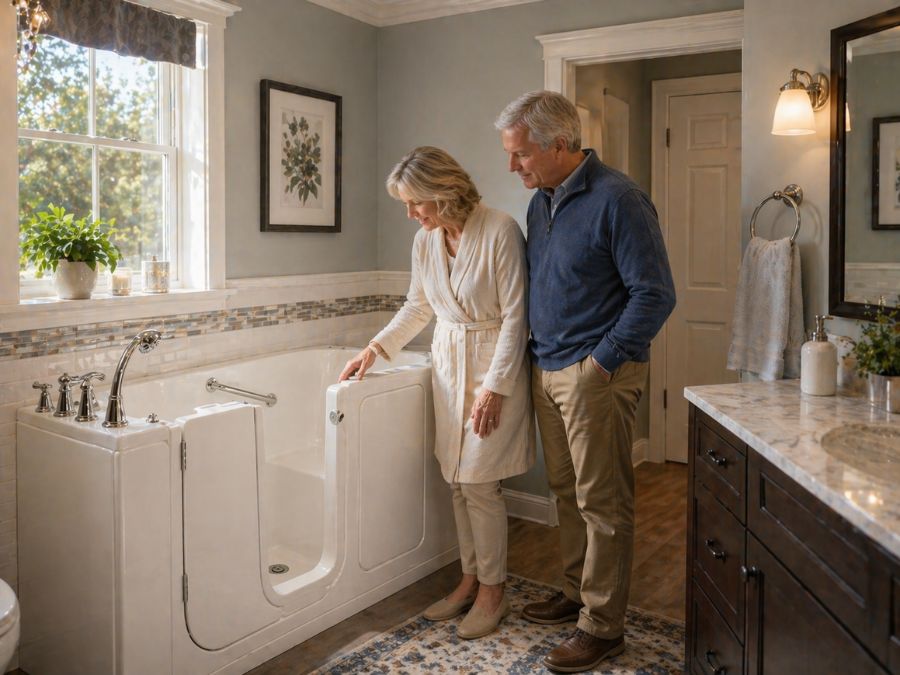
Soaker vs Hydrotherapy Walk-In Tubs
A soaker walk-in tub is designed for safe, simple bathing without added features, while a hydrotherapy tub includes water or air jets that provide therapeutic benefits like improved circulation and muscle relief. The right choice depends on whether the priority is basic safety or added comfort and wellness.
Understanding the Decision Most Families Are Actually Making
When families begin exploring walk-in tubs, the initial focus is almost always safety. The concern is straightforward, reduce the risk of slipping, make bathing easier, and create a setup that feels manageable day to day. At that stage, most people aren’t thinking about features. They’re thinking about solving a problem.
But as the conversation develops, the decision becomes less about whether to install a walk-in tub and more about which type will actually fit the person using it. That’s where the distinction between a soaker and a hydrotherapy model starts to matter. It’s no longer just a safety upgrade, it becomes a decision about daily comfort and long-term usability.
For seniors, this can feel like a balance between simplicity and benefit. Some prefer a straightforward solution that feels familiar and easy to manage. Others are open to something that offers more, especially if it helps with ongoing discomfort or stiffness. There’s no universal preference, it depends on the individual.
For adult children, the question often shifts toward value. Not just cost, but whether the added features will genuinely improve quality of life. The goal isn’t to choose the more advanced option by default. It’s to choose the one that will actually be used consistently and comfortably.
What a Soaker Walk-In Tub Is Designed to Do
A soaker walk-in tub is built around simplicity and reliability. Its purpose is to make bathing safer without introducing anything that complicates the process. The design focuses on ease of entry, stable seating, and a layout that supports natural movement.
For many homeowners, this approach is exactly what they want. There’s a sense of familiarity to it. The controls are straightforward, the process is predictable, and there’s very little to learn or adjust to. That consistency can be especially important for someone who values routine or may feel overwhelmed by additional features.
From a practical standpoint, a soaker tub also tends to require less upkeep. Without jets or internal systems, there are fewer components that need attention over time. That makes it a strong option for households that want a dependable, low-maintenance solution.
What stands out most in real-world use is how quietly effective it is. It doesn’t change the experience dramatically, it simply removes the parts that made it difficult. For many people, that’s enough to restore confidence in a daily routine.
What a Hydrotherapy Walk-In Tub Adds
A hydrotherapy walk-in tub builds on the same safety foundation but introduces a completely different experience once the bath begins. The addition of water or air jets turns the tub into something that actively supports the body rather than simply accommodating it.
For individuals dealing with joint pain, stiffness, or circulation issues, this can make a noticeable difference. The gentle pressure from the jets can help relieve tension and improve comfort in a way that a standard soak does not. Over time, this often changes how the tub is used. It becomes less of a necessity and more of a routine people look forward to.
That shift matters more than most expect. When a feature provides real relief, it tends to be used consistently. In some homes, the tub becomes part of a daily or near-daily rhythm, especially in the evening when discomfort tends to build up. That consistency is where the long-term value shows up.
At the same time, it’s important to recognize that hydrotherapy adds complexity. There are more controls, more components, and a slightly more involved process. For some users, that’s a worthwhile trade-off. For others, it may feel like more than they need.
The Practical Differences You Notice Over Time
At first, the difference between these two options may seem simple. One includes jets and one does not. But over time, the way each tub fits into daily life becomes much clearer.
A soaker tub tends to support a quicker, more predictable routine. It’s often used in the same way each time, without variation. For someone who values simplicity or prefers not to manage additional settings, that consistency becomes a benefit rather than a limitation.
A hydrotherapy tub introduces a different pace. Baths may last longer, and the experience may vary depending on how the jets are used. For some people, this becomes a meaningful part of their day. For others, especially those who prefer efficiency, it may not be as appealing.
Another difference shows up in how often the tub is used. Soaker tubs are typically used as needed, while hydrotherapy tubs are more likely to become part of a regular routine. That distinction can help clarify which option makes more sense based on lifestyle.
Installation and Home Considerations
From an installation perspective, both types of tubs follow a similar starting point. The existing bathtub is removed, and the new unit is installed within that same footprint. This makes both options viable for most homes without requiring a full bathroom redesign.
Where the difference begins to show is in what the home needs to support the tub. A soaker model is generally more straightforward. It relies on existing plumbing and doesn’t require additional systems to operate.
A hydrotherapy tub, on the other hand, may require a closer look at electrical capacity and water supply. In older homes, this can mean making minor upgrades to ensure everything functions properly. These aren’t unusual adjustments, but they do need to be accounted for during planning.
In coastal environments like the Lowcountry, humidity and air quality also play a role. Proper sealing and material selection are important for long-term performance, especially in tubs with more internal components. With the right installation approach, both types can perform reliably, but hydrotherapy models require a bit more attention to detail upfront.
Cost Differences and What Drives Them
The cost difference between a soaker and a hydrotherapy tub reflects both the complexity of the unit and what’s required to install it properly. A soaker tub is typically more affordable because it focuses on essential functionality.
Hydrotherapy tubs come at a higher price point due to the added systems involved. The jets, motors, and controls increase the cost of the unit itself, and in some cases, installation costs may be slightly higher as well.
What matters most is how that difference aligns with actual use. If the added features will be used regularly and provide meaningful comfort, the higher investment often makes sense. If not, a simpler model may be the better choice. For many families, the decision becomes clearer when they think about how the tub will be used on a typical day rather than focusing only on features or price.
Which One Makes More Sense for Your Situation
Choosing between a soaker and a hydrotherapy tub ultimately comes down to how the space will be used and what matters most to the person using it.
A soaker tub is often the right fit for someone who wants a straightforward, reliable solution that focuses entirely on safety. It works well when simplicity and ease of use are the top priorities.
A hydrotherapy tub makes more sense when there’s a clear benefit to having that added function. If it provides relief, encourages regular use, or improves comfort in a noticeable way, it becomes more than just an upgrade.
The goal isn’t to choose the more advanced option, it’s to choose the one that fits naturally into daily life without adding unnecessary complexity.
Choosing What Feels Right for the Long Term
Most families begin this process focused on solving a safety concern. Over time, that conversation expands into something more personal, what will make daily life feel easier, more comfortable, and more sustainable.
There isn’t a universal answer, and that’s what makes this decision worth taking the time to think through. The best choice is the one that fits naturally into everyday routines and continues to feel right over time.
If you’re comparing options, the most helpful next step is seeing how each type would work in your home. Schedule a no-pressure home safety assessment to get a clear, practical understanding of what makes the most sense for your space and needs.

Jason James is Co-Founder and Director of Sales at Home Mobility Solutions, serving homeowners across the Hilton Head Island–Bluffton–Port Royal, SC Metro Area with walk-in tubs, stair lifts, home elevators, and other accessibility upgrades. He moved to the Lowcountry in 1993 and built a career in residential and commercial construction before founding Lowcountry Walk-In Tubs in 2009 to help seniors and people with disabilities bathe safely at home. That company grew into Home Mobility Solutions, where Jason now leads sales and client relationships across Bluffton, Hilton Head Island, Beaufort, Ridgeland, and Hardeeville.