
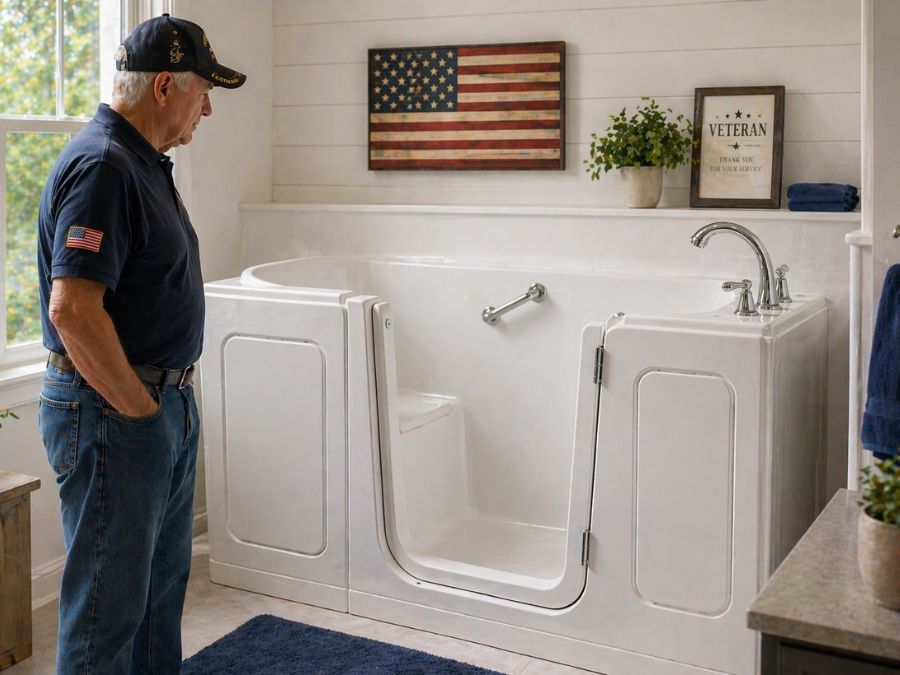
Are There Walk-In Tub Options For Veterans In Georgia?
Yes, veterans in Georgia may qualify for financial assistance for walk-in tubs through VA programs like the HISA, SAH, and SHA grants. These benefits can help cover medically necessary bathroom modifications, though eligibility and coverage amounts vary.
Why This Question Comes Up for Many Veterans
For many veterans, aging in place isn’t just about comfort, it’s about maintaining independence after years of service. As mobility changes, the bathroom often becomes the first place where safety concerns show up, especially when stepping over a traditional tub.
In Georgia, and particularly in older homes around Savannah and similar areas, bathrooms were not built with accessibility in mind. High tub walls, tight layouts, and limited support features can turn a daily routine into something that feels uncertain.
That’s why walk-in tubs come into the conversation. But for veterans, the question quickly becomes more specific: is there any assistance available to help cover the cost?
The Main VA Program That Helps with Walk-In Tubs
The most common program veterans use for walk-in tubs is the Home Improvements and Structural Alterations (HISA) grant. This program is designed to help cover medically necessary home modifications, including bathroom upgrades that improve safety and accessibility.
If a VA physician determines that a walk-in tub is medically necessary, it may qualify under this program. The grant can be used for structural changes like installing safer bathing systems, adjusting plumbing, and making the space more usable.
The funding is capped at a lifetime amount. Veterans with service-connected disabilities may receive up to about $6,800, while those with non-service-connected conditions typically qualify for up to $2,000. Because walk-in tubs often cost more than the grant amount, most veterans should expect some out-of-pocket cost. However, the grant can still significantly reduce the total expense.
Important Limitations Veterans Should Understand
One of the most important details and one that often causes confusion—is what the VA will and will not cover. The HISA program is focused on medical necessity, not luxury. That means basic walk-in tubs designed for safe bathing may qualify, but spa-style tubs with hydrotherapy jets are often excluded because they are considered non-essential.
This distinction matters when selecting a product. Choosing a simpler, safety-focused model increases the likelihood of approval, while more advanced features may need to be paid for separately. It’s also important to know that the grant is a lifetime benefit. Once the maximum amount is used, additional funding from HISA is no longer available, even for future modifications.
Other VA Grants That May Apply
In addition to HISA, there are two other VA programs that can sometimes apply, depending on the veteran’s condition.
The Specially Adapted Housing (SAH) grant is designed for veterans with severe service-connected disabilities. This program can provide significantly higher funding—sometimes over $100,000—to make major home modifications, including fully accessible bathrooms.
The Special Housing Adaptation (SHA) grant is similar but applies to a narrower range of conditions. It provides smaller amounts but can still be used for accessibility improvements like safer bathing setups.
These programs are more restrictive in terms of eligibility, but for those who qualify, they can cover a much larger portion of the cost.
What the Process Looks Like in Practice
Applying for a VA grant isn’t complicated, but it does require a few key steps. The process usually begins with a VA physician evaluating the need for a home modification and writing a prescription that explains why it’s necessary.
From there, the veteran submits an application along with contractor estimates and documentation of the current bathroom setup. In some cases, the VA may conduct a review or inspection before approving the project.
The timeline can vary, but many applications are processed within several weeks once all required information is submitted. What matters most is making sure everything is documented clearly from the beginning. Missing details or incomplete applications are one of the most common reasons for delays.
What Veterans in Georgia Should Keep in Mind
While VA programs are federal, the way projects are carried out depends heavily on local conditions. In Georgia, and especially in coastal areas like Savannah, homes often present specific challenges. Older plumbing systems, tight bathroom layouts, and humidity all affect how installations are planned. These factors don’t prevent a walk-in tub from being installed, but they do influence cost and timeline.
It’s also important to work with a contractor who understands both VA requirements and local housing conditions. The project needs to meet medical necessity guidelines while also functioning properly in the home long term.
Is It Worth It for Veterans?
For many veterans, the answer is yes, but it depends on timing and need.
A walk-in tub becomes most valuable when there are clear signs that the current setup is no longer safe. That might include difficulty stepping into the tub, increased reliance on support, or hesitation during daily routines.
When installed at the right time, it can extend independence and reduce the likelihood of injury. The VA funding helps make that transition more manageable, even if it doesn’t cover the full cost.
The key is making sure the solution matches the situation. The goal isn’t just to use the benefit, it’s to create a safer, more reliable space for everyday life.
Making the Most of the Benefit
For veterans in Georgia, these programs are designed to make aging in place safer and more realistic. They won’t cover every cost, but they can make a meaningful difference in getting the right solution in place.
If you’re considering a walk-in tub, the next step is understanding what would qualify in your specific situation. Schedule a no-pressure home safety assessment to evaluate your space and determine how to align the project with VA requirements while making sure it works for your home long term.
Jason James is Co-Founder and Director of Sales at Home Mobility Solutions, serving homeowners across the Hilton Head Island–Bluffton–Port Royal, SC Metro Area with walk-in tubs, stair lifts, home elevators, and other accessibility upgrades. He moved to the Lowcountry in 1993 and built a career in residential and commercial construction before founding Lowcountry Walk-In Tubs in 2009 to help seniors and people with disabilities bathe safely at home. That company grew into Home Mobility Solutions, where Jason now leads sales and client relationships across Bluffton, Hilton Head Island, Beaufort, Ridgeland, and Hardeeville.