
Can A Walk-In Tub Cause Mold Problems In Savannah’s Humid Climate?
No, a properly installed walk-in tub does not cause mold problems, even in Savannah’s humid climate. Mold issues typically come from poor ventilation, improper sealing, or existing moisture problems—not the tub itself.
Why This Question Comes Up So Often in Savannah
In Savannah, humidity isn’t just a seasonal issue—it’s part of daily life. Homes deal with moisture year-round, especially in bathrooms where steam and water are already part of the environment. Because of that, homeowners tend to be cautious about anything that might trap moisture or make conditions worse.
When families start looking into walk-in tubs, this concern comes up naturally. The idea of a sealed door, deeper basin, and longer soak time can raise questions about whether moisture might linger or create new problems. It’s a reasonable concern, especially in older homes where ventilation may already be limited.
What’s important to understand is that mold doesn’t come from the type of tub being used. It comes from how moisture is managed in the space as a whole.
What Actually Causes Mold in a Bathroom
Mold forms when moisture is allowed to sit without proper airflow or drying. In Savannah homes, that usually has more to do with the condition of the bathroom than any single fixture inside it.
Bathrooms that lack proper ventilation are the most common issue. Without a functioning exhaust fan or adequate airflow, humidity builds up quickly and lingers on surfaces like walls, ceilings, and grout lines. Over time, that creates the conditions mold needs to grow.
Older homes can also have hidden vulnerabilities. Worn caulking, small plumbing leaks, or gaps behind walls can allow moisture to collect where it isn’t visible. These issues often exist long before a walk-in tub is ever installed.
The key point is that mold is a moisture management issue, not a product issue.
How a Walk-In Tub Fits Into That Environment
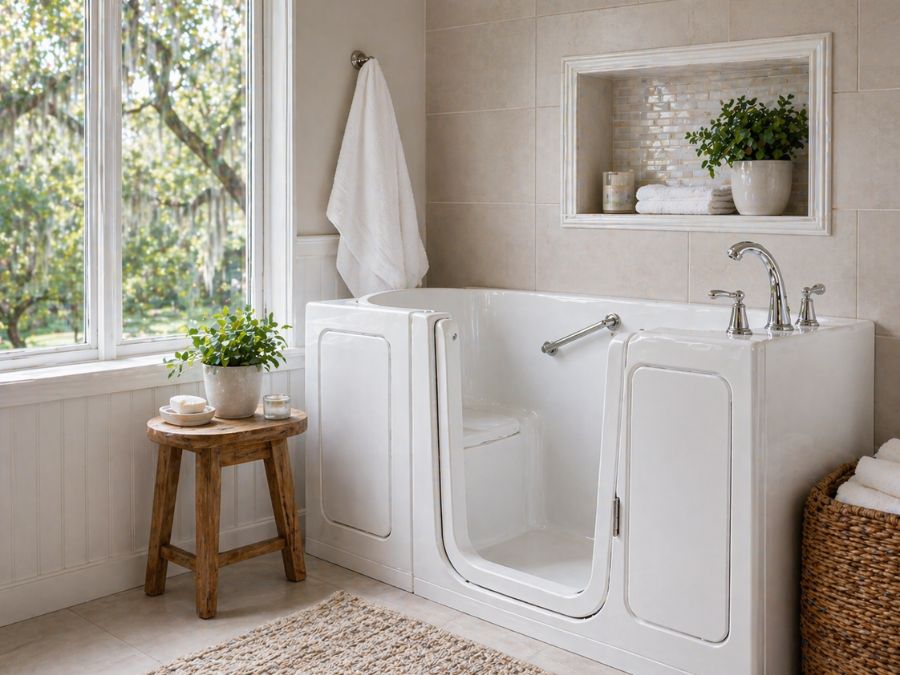
A walk-in tub, when installed correctly, is designed to contain water more effectively than a traditional tub. The door seals tightly, the surfaces are non-porous, and the system is built to handle regular use without allowing water to escape into surrounding areas.
In many cases, replacing an older tub with a walk-in model actually improves the overall condition of the space. Older tubs often have worn seals, cracked tile, or outdated materials that allow moisture to seep into areas it shouldn’t. Addressing those issues during installation can reduce the risk of mold rather than increase it.
It’s also worth noting that walk-in tubs do not create additional humidity beyond what a standard bath or shower would produce. The amount of moisture in the air depends on water temperature and ventilation, not the type of tub being used.
Installation Matters More Than the Tub Itself
The factor that makes the biggest difference is how the tub is installed. In Savannah homes, especially older ones, this step is where long-term performance is determined.
Proper sealing around the unit is critical. Any gaps between the tub and surrounding surfaces need to be sealed correctly to prevent water from getting behind walls or under flooring. This is standard practice in professional installations, but it becomes even more important in humid climates.
Ventilation should also be evaluated during the process. If the bathroom doesn’t already have a reliable exhaust system, this is often the right time to address it. Improving airflow benefits the entire space, not just the tub.
When installation is done with these factors in mind, the tub becomes part of a well-managed environment rather than a source of concern.
The Role of Daily Use and Maintenance
Once the tub is in place, everyday habits play a role in keeping the space dry and clean. Fortunately, maintaining a walk-in tub is not complicated and doesn’t require anything beyond what a standard bathroom already needs.
After use, allowing the tub to drain completely and wiping down surfaces helps prevent moisture from lingering. Running the exhaust fan during and after bathing allows humidity to clear more quickly, which is especially helpful in Savannah’s climate.
For tubs with additional features like jets, occasional cleaning ensures that internal components stay in good condition. This is part of normal upkeep and doesn’t add significant effort, but it does help maintain long-term performance.
These small steps are usually enough to keep the environment balanced and prevent moisture-related issues.
Why Walk-In Tubs Are Still a Smart Choice in Coastal Homes
In coastal areas like Savannah and the surrounding Lowcountry, every bathroom fixture has to perform in a humid environment. Walk-in tubs are designed with that in mind, using materials and construction methods that hold up under those conditions.
More importantly, they address one of the biggest safety concerns in the home without introducing new risks. When properly installed, they improve both usability and reliability in a space that already requires careful moisture management.
For many families, the concern about mold comes from wanting to make the right long-term decision. The reality is that a walk-in tub, installed correctly, supports that goal rather than working against it.
A Clear Answer for a Common Concern
It’s natural to question how a new fixture will perform in a climate like Savannah’s. Moisture is something every homeowner deals with, and it makes sense to think carefully about anything that could affect it.
A walk-in tub, when installed and maintained properly, does not create mold problems. In many cases, it improves the condition of the bathroom by replacing older materials and addressing existing issues during installation.
If you’re considering a walk-in tub and want to understand how it would work in your home, the next step is to look at your space directly. Schedule a no-pressure home safety assessment to get a clear picture of what’s possible and how to make the right decision with confidence.

Jason James is Co-Founder and Director of Sales at Home Mobility Solutions, serving homeowners across the Hilton Head Island–Bluffton–Port Royal, SC Metro Area with walk-in tubs, stair lifts, home elevators, and other accessibility upgrades. He moved to the Lowcountry in 1993 and built a career in residential and commercial construction before founding Lowcountry Walk-In Tubs in 2009 to help seniors and people with disabilities bathe safely at home. That company grew into Home Mobility Solutions, where Jason now leads sales and client relationships across Bluffton, Hilton Head Island, Beaufort, Ridgeland, and Hardeeville.