
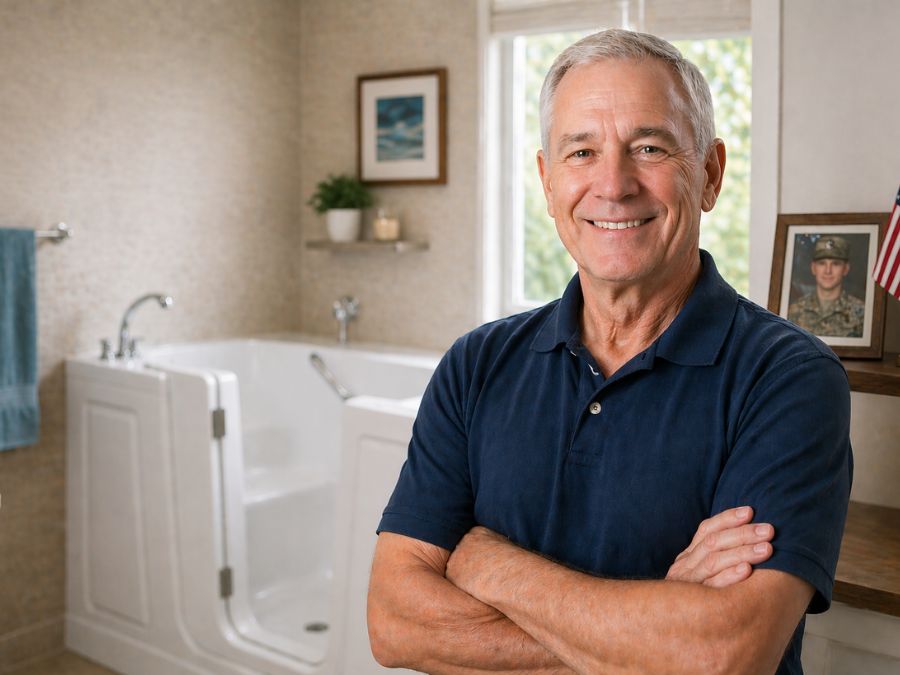
VA Grants for Walk-In Tubs for Veterans in Bluffton SC
Quick Answer:
Veterans in Bluffton, SC, may qualify for VA grants such as HISA, SAH, or SHA to help cover the cost of a walk-in tub or other home modifications. For 2026, HISA grants provide up to $6,800 for service-connected conditions and $2,000 for non-service-connected cases. Eligibility depends on medical necessity, proper documentation, and VA approval, but many veterans qualify for meaningful financial assistance.
This Is a Benefit Many Veterans Earned but Never Use
In Bluffton and across the Lowcountry, many veterans are living in homes that no longer match their physical needs, even though those homes once felt perfectly comfortable.
For some, the shift is gradual. Balance changes, stiffness, or lingering effects from past injuries start to make everyday movements more difficult. For others, the need becomes clear after a fall or a close call that changes how they think about safety in their own home. What used to feel routine begins to require more attention and caution.
What many veterans and their families do not realize is that help is often available through the VA to make these changes. These are not general assistance programs or temporary relief options. They are benefits earned through service, designed specifically to improve safety and daily function at home.
The challenge is not just qualifying. In many cases, it is understanding how to access the benefit, how to present the request correctly, and how to structure the project in a way that actually gets approved.
Why This Matters in Bluffton and the Lowcountry
Bluffton is part of a region with a strong and well-established veteran community, especially with nearby Beaufort and Parris Island contributing to a large population of retired service members.
Many of the homes in this area, particularly in neighborhoods like Sun City and The Crescent, follow similar Pulte-built floor plans. These homes were designed with comfort in mind, but not always with long-term mobility needs as a priority. Standard tubs, step-over entries, and compact bathroom layouts can become more challenging over time as needs change.
For veterans who want to remain in their home long term, accessibility upgrades are not just about convenience. They are about preserving independence and avoiding a situation where a preventable issue leads to a major disruption in living arrangements.
What VA Grants Can Cover for Walk-In Tubs
The VA offers several programs designed to support home accessibility, and walk-in tubs can qualify when they meet specific medical necessity requirements.
The most commonly used program for this type of modification is the Home Improvements and Structural Alterations grant, often referred to as HISA. This program is designed to help cover the cost of medically necessary home modifications, including safer bathing solutions that reduce fall risk and improve daily function.
For veterans with more significant service-connected disabilities, programs like Special Housing Adaptation and Specially Adapted Housing grants may apply. These programs are typically used for more extensive structural changes, but can also be part of a broader accessibility plan that includes bathroom upgrades.
In Bluffton homes, these grants are often used to replace traditional tubs with safer, more accessible setups that better match how the home is used today.
Updated 2026 VA Grant Funding Limits
VA funding levels are updated periodically, and having current figures helps set realistic expectations for what these programs can provide.
For the 2026 fiscal year, HISA grants provide up to $6,800 for service-connected conditions and up to $2,000 for non-service-connected cases. These funds can be applied toward qualifying home modifications when the request meets VA guidelines.
Special Housing Adaptation grants offer up to $25,350, while Specially Adapted Housing grants can provide up to $126,526 for more extensive accessibility needs tied to service-related conditions.
In many Bluffton projects, these grants may not cover the full cost of a walk-in tub installation, but they often reduce the financial burden enough to make the project realistic and achievable.
Understanding What the VA Will and Will Not Approve
One of the most important parts of this process is understanding how the VA evaluates these requests and what qualifies for approval.
The VA does not approve home upgrades based on comfort or preference alone. The modification must be medically necessary and clearly tied to improving safety, accessibility, or daily function. This requirement is where many applications encounter issues.
A walk-in tub is typically approved as a sanitary facility modification when it provides safe entry, seated bathing, and reduced fall risk. However, features like hydrotherapy jets or spa-style functions cannot be the primary justification for the request. If the application is framed as a luxury upgrade rather than a functional improvement, it may be denied.
This is why how the project is described and documented matters just as much as the project itself.
How to Apply for a VA Grant for a Walk-In Tub
For many veterans, the process can feel complicated at first, but it becomes much more manageable when broken down into clear, logical steps.
The first step is speaking with a VA healthcare provider. A doctor must document that the modification is medically necessary and explain how it improves safety or daily function within the home.
Once that documentation is established, the next step is submitting the appropriate application, typically through the HISA program. This includes the medical justification along with details about the proposed work and how it addresses the identified need.
A contractor estimate is then required to outline the scope of the project and provide cost details. This allows the VA to evaluate whether the request aligns with the medical necessity described in the application.
After submission, the VA reviews the application and may request additional information before issuing approval. Once approved, the project can move forward using the granted funds.
How Long Does the VA Approval Process Usually Take
Timing is one of the most common concerns, and setting realistic expectations helps reduce frustration during the process.
In many cases, the approval process takes several weeks to a few months from the initial application to final approval. The exact timeline depends on how quickly documentation is submitted, how complete the application is, and whether the VA requests additional clarification.
In Bluffton, we often see smoother timelines when everything is prepared correctly from the beginning. Delays typically occur when paperwork is missing key details or when the project description does not clearly align with the medical need.
Taking the time to prepare thoroughly up front often leads to a much smoother and faster process overall.
The VA Builder ID Requirement for Larger Grants
For larger programs like SAH and SHA, there is an additional requirement that many veterans are not aware of until later in the process.
These grants require the use of a contractor with a registered VA Builder ID. This ensures that the contractor meets the standards set by the Veterans Benefits Administration and understands the compliance requirements associated with these types of projects.
Because of this requirement, it is important to work with a team that is already familiar with VA processes and expectations. This helps avoid delays, ensures the project meets all necessary guidelines, and keeps everything aligned from approval through completion.
What Most Veterans Don’t Realize About the Process
One of the most common misconceptions is that the VA manages the entire project from start to finish.
In reality, the VA provides approval and funding, but the homeowner is responsible for coordinating the work, selecting the right solution, and ensuring everything meets the required standards.
We often see veterans who qualify for assistance but feel unsure how to move forward after receiving approval. Another common issue is choosing a solution that does not fully align with the medical documentation, which can create complications during the approval process.
Having a clear plan from the beginning helps prevent these issues and makes the process much more manageable.
Local Support and Where to Start in Bluffton
While the home modification process is handled separately, connecting with local VA resources can be an important early step.
In the Bluffton and Beaufort area, many veterans begin by visiting the Beaufort County Veterans Affairs office on Ribaut Road. This helps ensure their intent to file is documented and connects them with the appropriate local resources before moving forward.
Combining that step with a clear plan for the home modification itself helps keep the process organized and reduces the likelihood of delays later on.
Why Planning the Right Solution Matters
A walk-in tub is not just a standalone upgrade. It is part of a larger system that needs to function properly within the home.
In Bluffton homes, factors such as water heater capacity, bathroom layout, and available space all influence how well the final installation performs. These details become especially important when working with VA funding, because changes after approval can slow the process or require additional documentation.
Taking a system-first approach helps ensure that everything is aligned from the beginning, reducing the risk of complications and creating a smoother overall experience.
Is a Walk-In Tub Always the Right Choice for Veterans
While walk-in tubs are a strong solution for many veterans, they are not the right fit for every situation.
For those who are still mobile and prefer soaking, a walk-in tub can provide both safety and comfort while allowing them to maintain their independence. For others with more advanced mobility limitations or caregiver involvement, a walk-in or roll-in shower may provide easier access and greater flexibility.
The goal is not simply to choose a product. It is to choose the solution that best fits how the home is used on a daily basis.
Making the Most of VA Benefits in Your Home
VA grants can make a meaningful difference in turning an unsafe or difficult space into one that supports daily life.
For many veterans in Bluffton, this is an opportunity to improve safety and comfort without taking on the full financial burden of the project. The key is understanding how to use the benefit correctly and planning the project in a way that aligns with VA requirements from the start.
If you are considering a walk-in tub and believe you may qualify, it helps to begin with a clear understanding of both your home and the application process. A system-first home assessment can help align your needs with VA guidelines, prepare the necessary documentation, and ensure the project moves forward smoothly.
That way, the result is not just an approved project, but a solution that truly improves how your home functions every day.
Jason James is Co-Founder and Director of Sales at Home Mobility Solutions, serving homeowners across the Hilton Head Island–Bluffton–Port Royal, SC Metro Area with walk-in tubs, stair lifts, home elevators, and other accessibility upgrades. He moved to the Lowcountry in 1993 and built a career in residential and commercial construction before founding Lowcountry Walk-In Tubs in 2009 to help seniors and people with disabilities bathe safely at home. That company grew into Home Mobility Solutions, where Jason now leads sales and client relationships across Bluffton, Hilton Head Island, Beaufort, Ridgeland, and Hardeeville.