
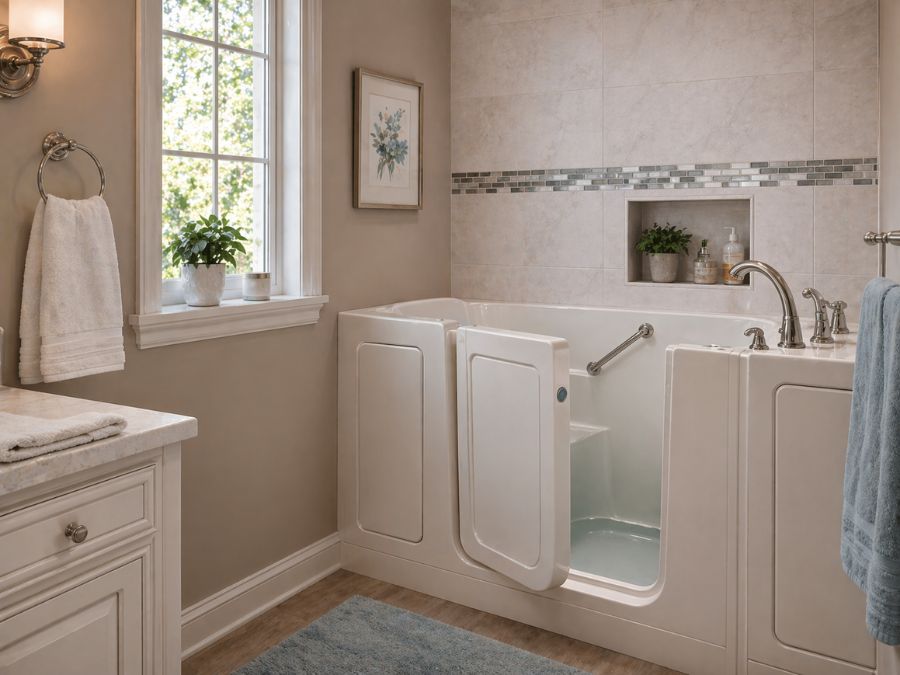
Aging in Place With a Walk-In Tub in Savannah
A walk-in tub can make aging in place in Savannah safer by removing the need to step over a traditional tub wall and adding built-in support like seating and grab bars. It’s one of the most practical ways to reduce fall risk and stay independent at home longer. In most homes, it can be installed within the existing tub space.
Why This Conversation Usually Starts in the Bathroom
In Savannah, people tend to stay once they’ve found the right home. It’s not just about the structure itself, but the neighborhood, the routines, and the familiarity that builds over time. That connection makes the idea of aging in place less of a preference and more of a priority for many families.
What’s interesting is that the need for change rarely comes from a major event. It usually starts with something subtle. A moment of hesitation stepping into the tub, or the realization that balance isn’t quite what it used to be. These small shifts don’t feel urgent at first, but they tend to repeat themselves until they become harder to ignore.
Bathrooms are where this shows up first because they require multiple movements at once. Stepping, turning, lowering, and standing back up all happen in a confined space. When any one of those movements becomes less stable, the entire routine starts to feel different.
We see this pattern consistently across homes in Savannah and throughout the Lowcountry, including Bluffton and Hilton Head. The layout may change from house to house, but the concern is almost always the same. Once the bathroom starts to feel uncertain, it becomes the first place families look to make a meaningful change.
What You Need to Know
A walk-in tub replaces your existing bathtub with a safer, easier-to-use setup designed for long-term mobility. It reduces fall risk, adds stability, and typically installs without a full remodel. For many Savannah homeowners, it’s one of the simplest ways to stay in their home longer with confidence.
What Actually Changes With a Walk-In Tub
The biggest shift comes from how the space is used. Instead of stepping over a high edge and lowering yourself down, you step through a door and sit in a stable, upright position. That change alone removes one of the most common causes of bathroom injuries.
From there, the experience becomes more controlled and predictable. You’re not adjusting your position to stay balanced or reaching awkwardly for support. Everything is designed to work with you rather than against you, which makes a noticeable difference over time.
For some homeowners, it also opens up a broader conversation. Depending on the layout and long-term needs, we sometimes compare options like walk-in showers or targeted safety upgrades such as grab bars, especially when a full change isn’t necessary.
Savannah Homes Aren’t Always Straightforward And That Matters
Savannah homes often come with unique layouts, especially in older properties. Plumbing may have been Savannah homes have character, but that character often comes with complexity. Many properties have been modified over time, especially older homes where plumbing and layouts have evolved in stages. That history can make homeowners unsure about what’s actually possible when it comes to upgrades.
In most cases, a walk-in tub can still work within the existing footprint of a traditional bathtub. That’s one of the reasons it’s such a practical solution. It avoids the need to completely redesign the bathroom, which is especially important in homes where structural changes would be more involved.
Even so, there are details that need to be addressed carefully. Plumbing may need to be updated to handle newer fixtures, and tighter spaces require precise planning to ensure safe access. In coastal environments like Savannah, moisture control also becomes part of the conversation, since proper sealing plays a role in long-term durability.
This is where experience tends to matter most. Installing the tub itself is only part of the process. Making sure it functions properly within the realities of the home—both immediately and over time—is what ultimately determines whether the upgrade truly works.
What the Process Looks Like in a Real Home
One of the biggest misconceptions is that installing a walk-in tub will turn into a long, disruptive project. In reality, the process is usually much more contained than people expect, especially when compared to a full bathroom renovation.
It begins with a walkthrough of the home to understand the layout, the condition of the existing bathroom, and how the space is currently being used. This step often answers more questions than anything else, because it brings the conversation out of theory and into something concrete.
From there, the existing tub is removed and the new one is installed within the same general footprint. Adjustments are made as needed, particularly with plumbing connections, but the goal is to keep the scope focused rather than expanding it unnecessarily.
In many Savannah homes, the installation can be completed in a matter of days. If the property is located in a historic district, there may be additional permitting requirements, especially for plumbing or electrical updates. A qualified installer should handle that process so the homeowner isn’t left navigating local regulations on their own.
The Part People Hesitate About
One of the most common concerns is what happens while the tub drains. Because the door seals shut, you do remain seated until the water drains before exiting, which can raise questions about comfort.
Modern walk-in tubs are designed to address this directly. Drain systems are significantly faster than older models, which reduces the amount of time you are waiting. Many units also include heated seating or backrests, which help maintain comfort as the water level drops.
In practice, most homeowners find that this part of the process is brief and manageable. It tends to feel more like a short pause rather than an inconvenience.
Where the Cost Conversation Usually Lands
Cost is always part of the discussion, but it rarely stands on its own. Most homeowners want to understand not just what something costs, but what it changes in the long run. That’s where the conversation tends to shift.
The total investment depends largely on the home itself. Factors like bathroom layout, plumbing condition, and any required updates all influence the final number. In older Savannah homes, it’s not uncommon to need some level of preparation before installation can move forward.
Even with those variables, the project is still typically more contained than a full remodel. The goal is not to rebuild the space, but to improve how it functions within its existing structure.
When compared to the cost of assisted living, the perspective often changes. With monthly costs in Savannah ranging from roughly $3,300 to $5,000 or more, the annual expense adds up quickly. For many families, a walk-in tub becomes part of a broader decision to remain at home longer, rather than transitioning into a recurring cost structure.
It’s Not Just About Safety
While safety is the main reason for making a change, the impact goes beyond that. Many homeowners notice a difference in how the space feels once the upgrade is complete.
For seniors, it often means feeling more stable and less cautious during everyday routines. For adult children, it provides reassurance that one of the highest-risk areas in the home has been addressed.
That sense of confidence tends to matter just as much as the physical changes.
Local Resources That Can Help
For those planning ahead, there are local resources available in Savannah that can provide additional guidance. Senior Citizens, Inc. on Bull Street offers programs that support independent living, while the Coastal Regional Commission’s Area Agency on Aging helps families navigate long-term planning decisions.
These organizations can be a helpful complement to home modifications when looking at the bigger picture.
Is a Walk-In Tub the Right Move?
A walk-in tub is often a strong solution, but it’s not the only option. Some homes may benefit from alternative approaches, depending on layout and long-term needs.
In certain cases, a walk-in shower or other mobility-focused upgrades may be more appropriate. The right choice depends on how the home is used today and how those needs may change over time.
A Practical Next Step
If this has been on your mind, it often helps to look at your actual space rather than trying to figure it out in theory. Seeing what’s possible in your specific home tends to answer questions more clearly than general research.
Schedule a no-pressure home safety assessment to better understand your options. It’s a straightforward way to get clarity and make a confident decision about what comes next.
Jason James is Co-Founder and Director of Sales at Home Mobility Solutions, serving homeowners across the Hilton Head Island–Bluffton–Port Royal, SC Metro Area with walk-in tubs, stair lifts, home elevators, and other accessibility upgrades. He moved to the Lowcountry in 1993 and built a career in residential and commercial construction before founding Lowcountry Walk-In Tubs in 2009 to help seniors and people with disabilities bathe safely at home. That company grew into Home Mobility Solutions, where Jason now leads sales and client relationships across Bluffton, Hilton Head Island, Beaufort, Ridgeland, and Hardeeville.