
The Complete Guide to Bathroom Safety for Independent Living
The bathroom is one of the most frequently used spaces in your home and one of the most dangerous. Studies show that a significant percentage of falls among older adults occur in bathrooms due to wet floors, slippery surfaces, and hard-to-navigate fixtures. Bathrooms are considered high-risk areas because they combine hard surfaces, water, and frequent movement in tight spaces, a recipe that can lead to accidents if safety isn’t prioritized.
Whether you’re planning for aging in place, recovering from an injury, or simply want to make your home safer for everyone, thoughtful bathroom upgrades can significantly improve your comfort, confidence, and independence.
Why Bathrooms Are High-Risk Areas
Bathrooms are uniquely challenging spaces:
- Wet floors from baths and showers create slipping hazards.
- Bathtub and shower thresholds require balance and strength to navigate.
- Limited space can make moving with assistive devices difficult.
For older adults, caregivers, or anyone with limited mobility, these elements make the bathroom one of the most accident-prone rooms in the house.
Key Safety Upgrades
Making your bathroom safer doesn’t require a complete remodel. Many upgrades are practical, effective, and can dramatically reduce the risk of falls and other injuries.
Walk-In Tubs
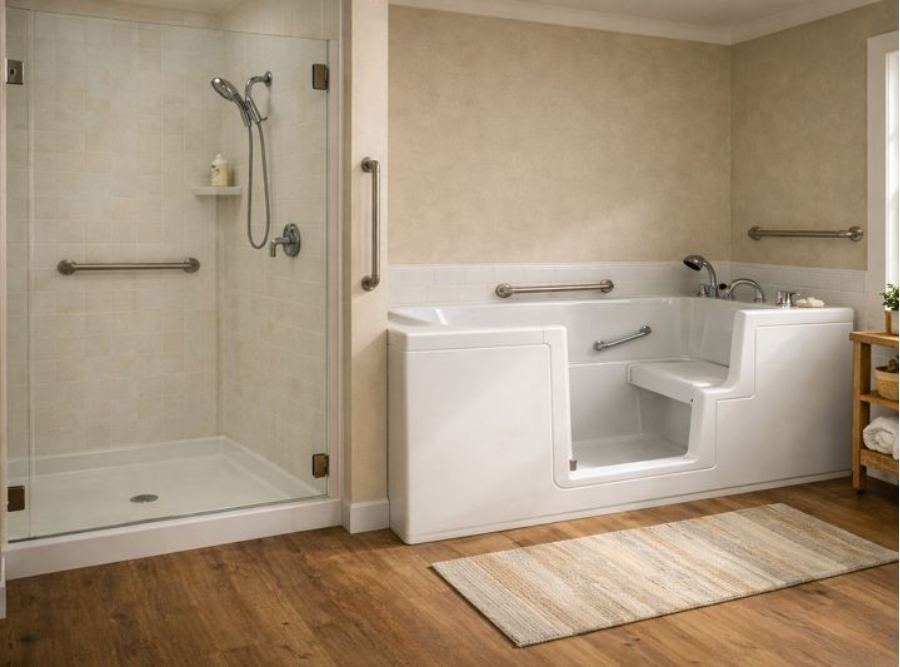
One of the most impactful safety upgrades for any bathroom is installing a walk-in tub. These tubs allow users to step in through a low threshold and sit comfortably while bathing, eliminating the need to climb over high tub walls, a common source of slips and falls. Walk-in tubs frequently include built-in safety features like slip-resistant flooring, seating, and grab bars. When planning a bathroom upgrade, working with a trusted walk-in tub installer ensures your tub is fitted and finished to meet your needs safely and effectively.
Walk-in tubs aren’t just for seniors, they’re ideal for anyone with balance issues, joint pain, or mobility limitations.
Grab Bars
Properly installed grab bars are among the most effective safety features you can add. These sturdy supports help maintain balance, prevent slips, and give users something secure to hold onto when moving around the shower, tub, or toilet.
- Install grab bars near the toilet, shower, and bathtub.
- Choose styles that match your bathroom design while providing reliable support.
Unlike towel racks or decorative rails, purpose-built grab bars are designed to support body weight and reduce fall risk.
Non-Slip Flooring
A wet floor is a slippery floor. Adding non-slip flooring materials or traction strips near wet areas like the shower entrance and sink helps prevent falls by providing better grip underfoot.
Keep in mind that bathroom flooring should have a high dynamic coefficient of friction (DCOF) to ensure traction even when wet.
Handheld Showers
A handheld shower hose gives you more control while bathing, allowing users to wash comfortably while seated or standing. These shower heads are especially helpful for those with limited balance, as you won’t have to move as much to rinse off.
Seating Options
Shower chairs, transfer benches, and built-in seating let users bathe while seated, reducing fatigue and fall risk. These options are especially useful for anyone who struggles to stand for long periods or has pain standing on hard surfaces.
Comfortable bathroom seating solutions enhance both safety and dignity during daily routines.
Accessibility for All Ages
Bathroom safety isn’t just a concern for seniors, it benefits everyone. While older adults may be the primary group we think about when planning accessible bathrooms, injuries can happen to people of any age, especially after surgery or accidents. Better design and accessibility can help:
- Older adults stay independent longer.
- People recovering from injuries avoid unnecessary strain.
- Families feel more at ease knowing the bathroom is safe for all users.
Accessible bathroom design doesn’t mean sacrificing comfort or style, it means planning with purpose.
Choosing the Right Products
When selecting bathroom upgrades, keep these considerations in mind:
1. ADA Compliance
While homes aren’t legally required to meet ADA standards, the Americans with Disabilities Act (ADA) guidelines offer excellent direction for safety and accessibility. ADA-style grab bars, properly located fixtures, and clear floor space help ensure your bathroom serves you well now and into the future.
2. Durable Materials
Look for non-corrosive, water-resistant materials for grab bars, shower seats, and flooring — especially in high-moisture environments like bathrooms.
3. Warranty and Quality
Invest in products from reputable manufacturers who offer warranties and stand behind their safety performance. Well-made products not only last longer but provide greater peace of mind.
4. Professional Installation
Some upgrades like grab bars, tubs, or complex shower systems, work best when installed by professionals. Proper installation helps ensure safety and compliance with building standards.
Maintenance Tips
Making safety upgrades is just the first step. Regular maintenance keeps them working properly and prevents wear-related risks.
Cleaning
Keep all surfaces clean and free of mold or mildew, slippery buildup can undo the benefits of non-slip flooring and reduce the effectiveness of grab bars.
Checking Grips and Stability
Test grab bars, shower seats, and removable accessories regularly to ensure they haven’t loosened. Tighten or replace items that show wear or instability.
Encourage Assessment and Upgrades
Bathrooms don’t have to be dangerous. With thoughtful planning and smart upgrades, you can make yours safer for independent living whether you’re planning for later life, dealing with temporary mobility challenges, or just want peace of mind.
Evaluating your bathroom with functionality and safety in mind is a proactive step toward greater independence and confidence at home.
If you’re unsure where to begin or want personalized guidance, consider reaching out for a free mobility assessment, a professional evaluation can help you choose the most impactful safety solutions for your unique needs.