
Can I Shower in a Walk-In Tub?
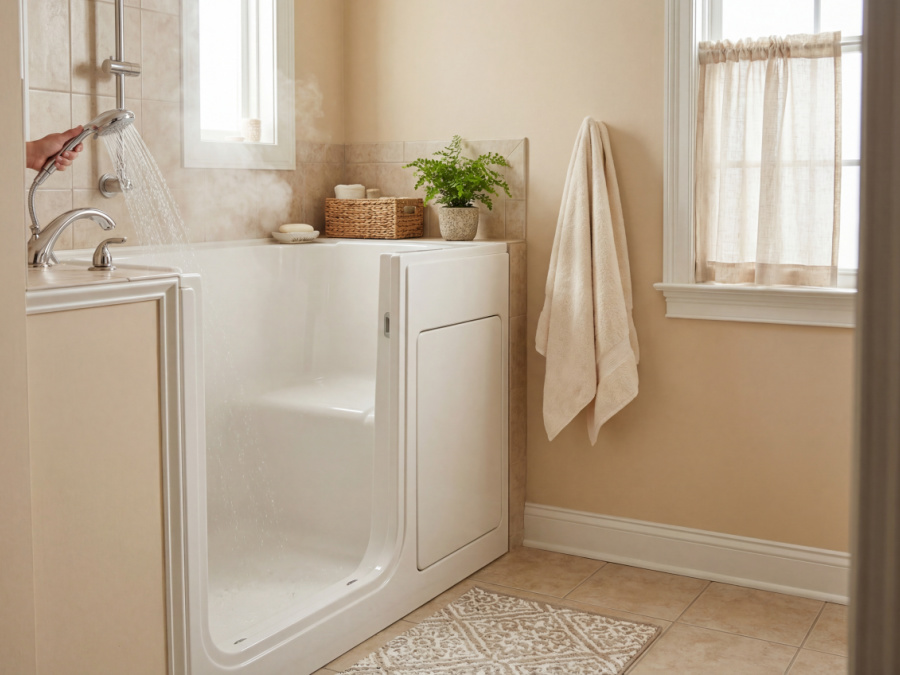
Yes, most walk-in tubs are designed for showering. Nearly all modern walk-in tubs include a handheld showerhead with a wall-mounted bracket, allowing you to shower standing or seated without filling the tub. Some models also include overhead rainfall showerheads or tub-shower combinations that function as both a walk-in tub and a traditional shower enclosure.
Quick Comparison: Walk-In Tub Shower vs. Alternatives
| Feature | Walk-In Tub (with shower) | Walk-In Shower | Standard Tub-Shower |
|---|---|---|---|
| Entry height | 3-7 inches | 0-2 inches | 14-16 inches |
| Built-in seating | Yes, permanent | Optional bench | None |
| Bathing capability | Yes | No | Yes |
| Standing shower | Yes | Yes | Yes |
| Grab bars | Integrated | Must add separately | Must add separately |
| Typical cost installed | $5,000-$12,000 | $4,000-$10,000 | $2,000-$5,000 |
The walk-in tub delivers both showering and bathing safety in a single fixture, which is why it makes sense for homeowners planning to age in place.
Why This Question Matters More Than You Think
Here’s the thing—when people start looking at walk-in tubs, they’re usually focused on the bathing part. The low door, the built-in seat, the safety features. All of that makes sense.
But then reality hits: I don’t take a bath every day. I shower.
And suddenly, the question isn’t just “can I shower in this thing?” It’s “am I about to spend $8,000 on something I can only use three times a week?”
That’s a legitimate concern, and it’s one worth getting right.
Yes, You Can Shower Daily in a Walk-In Tub
Yes, you can shower in a walk-in tub. In fact, most people who own walk-in tubs shower in them more often than they bathe.
The tub becomes a walk-in shower with a built-in seat and safety features you’d otherwise have to add separately. You step in through the low door, close it behind you, and shower exactly like you would in any other shower—except you’re standing on a slip-resistant surface with grab bars exactly where you need them.
If you want to sit while you shower, the seat is already there. If you want to stand, the space works for that too.
The walk-in tub doesn’t replace your ability to shower. It enhances it.
How Showering in a Walk-In Tub Actually Works
Walk-in tubs designed for showering include a handheld showerhead mounted on a sliding bar. This lets you adjust the height and angle whether you’re standing or seated.
The showerhead typically delivers 1.8 to 2.5 gallons per minute—the same flow rate as a standard shower. Water pressure feels normal because it is normal. You’re not working with some compromise system designed around bathing. It’s built to do both well.
If you’re standing: The door closes, you turn on the water, and you shower. The low threshold (3-7 inches) means you step in and out safely, but once you’re inside, the space functions like a standard shower stall. Most walk-in tubs are 28 to 32 inches wide and 52 to 60 inches long, which gives you enough room to move comfortably.
If you’re sitting: You sit on the built-in seat and use the handheld showerhead to rinse. The seat is positioned 17 to 19 inches high—standard chair height—so you’re not crouching or straining. The water drains continuously while you shower, so there’s no waiting.
Some higher-end models include both a handheld showerhead and an overhead rainfall showerhead. This gives you the option to stand under a traditional overhead spray while still having the handheld available for rinsing or seated use.
Space Requirements for Showering Comfortably
Walk-in tubs designed for both bathing and showering typically measure:
- Length: 52-60 inches (same as standard tubs)
- Width: 28-32 inches (standard); 36-40 inches (bariatric)
- Interior standing space: Approximately 24-28 inches wide by 36-40 inches long
This gives you enough room to stand and turn comfortably while showering. If you’re over 6 feet tall or prefer more space, look for models at the longer end of the range (60 inches) or consider ADA-compliant wider models.
Most walk-in tubs fit in the same footprint as a standard 60-inch tub, which means they work in most bathrooms without requiring structural changes.
Tub-Shower Combinations: When You Need Both
If your household includes people who want a traditional shower and people who need the safety of a walk-in tub, there’s a solution for that: tub-shower combination units.
These models include a full-height shower enclosure with walls, a door that seals for bathing, and a showerhead system that works for standing or seated use. They look and function like a walk-in shower, but the door allows you to fill the tub when you want a bath.
This makes them ideal for:
- Multi-generational households
- Homes with only one bathroom
- People who want maximum flexibility
- Anyone planning to age in place but not ready to give up traditional showers
Brands like Kohler, American Standard, and Safe Step all offer tub-shower combo units. These cost slightly more than standard walk-in tubs—typically $6,000 to $12,000 installed—but they eliminate the “what if” concern entirely.
What Shower Capability Costs
Most walk-in tubs include a handheld showerhead as a standard feature at no additional cost. This is true for basic models starting around $2,500 and mid-range models up to $8,000.
Upgrades that cost extra:
- Dual showerhead systems (handheld + overhead): Add $300-$800
- Thermostatic mixing valves (prevent temperature fluctuations): Add $150-$400
- High-pressure showerhead systems: Add $200-$500
- Full tub-shower enclosure with walls: Add $1,500-$3,500
If you’re comparing a walk-in tub to a walk-in shower, the costs are similar. A custom walk-in shower with a built-in seat, grab bars, and slip-resistant flooring typically runs $4,000-$10,000 installed—roughly the same as a walk-in tub that does both.
The difference is that the walk-in tub gives you bathing capability without additional cost, while adding a tub to an existing walk-in shower later would require a full renovation.
Why Showering in a Walk-In Tub Is Safer Than Standard Showers
Once you get past the initial question of “can I shower in this,” you start noticing the advantages.
The slip-resistant floor isn’t just helpful when bathing. It’s there every time you step in wet, which is every shower. That textured surface gives you traction most standard showers don’t have.
The grab bars aren’t bolted on as an afterthought. They’re integrated into the design at the exact height and position where you’d naturally reach for support. Most people don’t think they need grab bars until they’re reaching for the soap with wet hands and nothing’s there.
The built-in seat means you can sit down if you’re tired, recovering from surgery, shaving your legs, or just want to enjoy the hot water without standing. That’s not a medical necessity. That’s just smart design.
The low entry threshold means no awkward step-over moves when you’re wet and soapy. You walk in and out with both feet on solid ground. For people with knee pain, hip issues, or just general “I’m-not-as-flexible-as-I-used-to-be” reality, this is a bigger deal than it sounds like on paper.
The One Real Limitation (And How to Work Around It)
Here’s the honest part: Walk-in tubs are not as wide as custom walk-in showers.
A standard walk-in tub is 28 to 32 inches wide. A luxury walk-in shower might be 36 to 48 inches or larger. If you’re used to a spacious shower with room to move in every direction, a walk-in tub will feel more contained.
That said, 30 inches is the same width as most standard tub-shower combinations, so if you’re currently showering in a standard tub, the space will feel familiar.
If width is a priority, look for ADA-compliant or bariatric walk-in tub models. These are built wider (up to 40 inches) and give you more room without sacrificing the safety features.
Showerheads, Water Pressure, and What Actually Matters
People worry that walk-in tubs will have weak water pressure or awkward showerhead placement. In reality, the quality depends on the same factors as any shower: your home’s water pressure and the showerhead itself.
Walk-in tubs use standard plumbing. If your house has good water pressure, the walk-in tub will too. If your house has weak pressure, the tub won’t fix that—but neither will any other shower.
Most walk-in tubs include a handheld showerhead with multiple spray settings. If you don’t like the one that comes with the tub, you can replace it with any standard showerhead. The connection is the same.
Some premium models include:
- Dual showerhead systems (handheld + overhead rainfall)
- Thermostatic mixing valves (prevents temperature spikes)
- High-flow showerheads (2.5 GPM for maximum pressure)
These features cost more but deliver a shower experience that rivals high-end custom showers.
Installation and Maintenance: Shower-Specific Considerations
Installation timeline: Adding shower capability doesn’t extend installation time. Whether you plan to shower, bathe, or both, walk-in tub installation takes 1-2 days. The showerhead and valve are installed as part of the standard process.
Electrical requirements: Basic walk-in tubs with showers don’t require electrical work. If you’re adding hydrotherapy jets or heated features, you’ll need a dedicated GFCI outlet, but this isn’t related to shower function.
Maintenance differences: Showering in a walk-in tub is actually easier to maintain than bathing. When you shower, water drains continuously, which prevents the residue buildup that can occur with jet systems during baths. The door seal should be wiped down after each use—the same practice you’d follow with any shower door.
Long-term durability: The showerhead and valve components are standard plumbing fixtures with a typical lifespan of 10-15 years. These are easily replaceable without affecting the tub itself, which should last 15-20 years with proper care.
What to Look for If Showering Is Your Priority
If you plan to shower more often than you bathe, make sure your walk-in tub includes:
- A quality handheld showerhead with adjustable height and multiple spray settings
- A slip-resistant floor rated for wet use (textured acrylic or fiberglass)
- Grab bars positioned for standing and seated use (most models include 2-4 bars)
- A door that seals properly whether you’re bathing or showering (test this during installation)
- Adequate width for comfortable movement (30 inches minimum, 32+ preferred)
If your household needs both traditional shower capability and walk-in tub safety, look specifically at tub-shower combination units rather than adapting a tub-only model.
Common Questions About Showering in Walk-In Tubs
Do I need special plumbing to shower in a walk-in tub?
No. Walk-in tubs use standard shower plumbing. The showerhead connects to your existing water supply the same way any shower does. If you’re adding an overhead rainfall showerhead in addition to the handheld, you may need a second valve, but most installations work with what you already have.
Can I use my own showerhead?
Yes. Walk-in tubs use standard ½-inch threaded connections, so you can replace the included showerhead with any model you prefer. Many people upgrade to higher-flow or multi-setting showerheads after installation.
Is water pressure weaker in a walk-in tub shower?
No. Water pressure depends on your home’s plumbing, not the tub. If you have good pressure now, you’ll have good pressure in the walk-in tub. The showerhead flow rate is typically 1.8-2.5 GPM, which is standard for modern showers.
Do I have to close the door to shower?
Yes, but only to prevent water from splashing onto the bathroom floor. The door isn’t sealed shut like when bathing—it simply closes to contain spray. You can open it immediately after showering without waiting for drainage.
Can multiple people shower in the same walk-in tub?
Walk-in tubs are designed for single-person use. The width (28-32 inches) accommodates one person comfortably. If you need a shower for two people, a standard walk-in shower would be a better choice.
Getting the Right Walk-In Tub for Your Shower Needs
If you’re considering a walk-in tub primarily for showering, three factors matter most:
Showerhead quality and adjustability. Make sure the model includes a handheld showerhead on a sliding bar with multiple spray settings. Test the range of motion during your consultation—it should reach comfortably whether you’re standing or seated.
Interior dimensions. If you’re taller than 5’10” or prefer more movement space, prioritize models at 60 inches long and 30+ inches wide. Bariatric models offer even more room without losing safety features.
Door seal reliability. The door needs to contain shower spray without leaking. Ask your installer specifically about their door seal testing process and what warranty covers seal performance over time.
The walk-in tub market includes dozens of models, and not all are equally well-designed for daily showering. Working with an experienced installer who understands both bathing and showering requirements helps ensure you get a tub that works for how you’ll actually use it.
The Bottom Line: What You’re Really Asking
When someone asks “can I shower in a walk-in tub,” what they’re really asking is: Am I going to regret this?
They’re wondering if they’re trading convenience for safety. If they’re giving up something they do every day for something they might only need later.
The answer is no.
A walk-in tub gives you both. You can shower every morning like you always have, but now you’re doing it in a space designed to keep you safe whether you’re 55, 75, or anywhere in between.
The door isn’t just for filling the tub. It’s for stepping in and out safely every single day, which is exactly what showering requires.
You’re not choosing between a shower and a tub. You’re choosing a bathroom solution that does both without compromise.
Walk-In Tubs Work as Daily Showers, Not Just Occasional Baths
The best spaces work for how you actually live, not how you think you’re supposed to live.
A walk-in tub that lets you shower isn’t a medical device that happens to have a showerhead. It’s a thoughtfully designed bathroom fixture that solves the safety problem without creating new ones.
You don’t lose your shower. You gain a safer way to use it.
And on the days when you want a bath—when your back hurts, when it’s cold outside, when you just want to sit in hot water for twenty minutes—the tub is there for that too.
That’s not a compromise. That’s having options.